A Fasrad agent works as a study companion by starting from the student's own material. She photographs a worksheet or a page of class notes, the agent reads it, and from that text it can explain, quiz, build flashcards, and remind her to review, in the language she set once. It turns her notes into practice and keeps that practice on a schedule.
How to use an AI agent as a study companion
Photograph the worksheet, get it explained in the language you chose, turn the terms into flashcards, and let the agent run the reviews. The questions a student actually asks, answered.
Fasrad · September 16, 2026 · 4 min read
Can it read my handwritten notes?
Yes. Drop the photo into the chat and ask for what you need. The agent looks at the image, pulls out the text, and keeps working from it for the rest of the conversation. Maya, a junior in Portland taking AP US History and Spanish 3, does this with almost every worksheet.
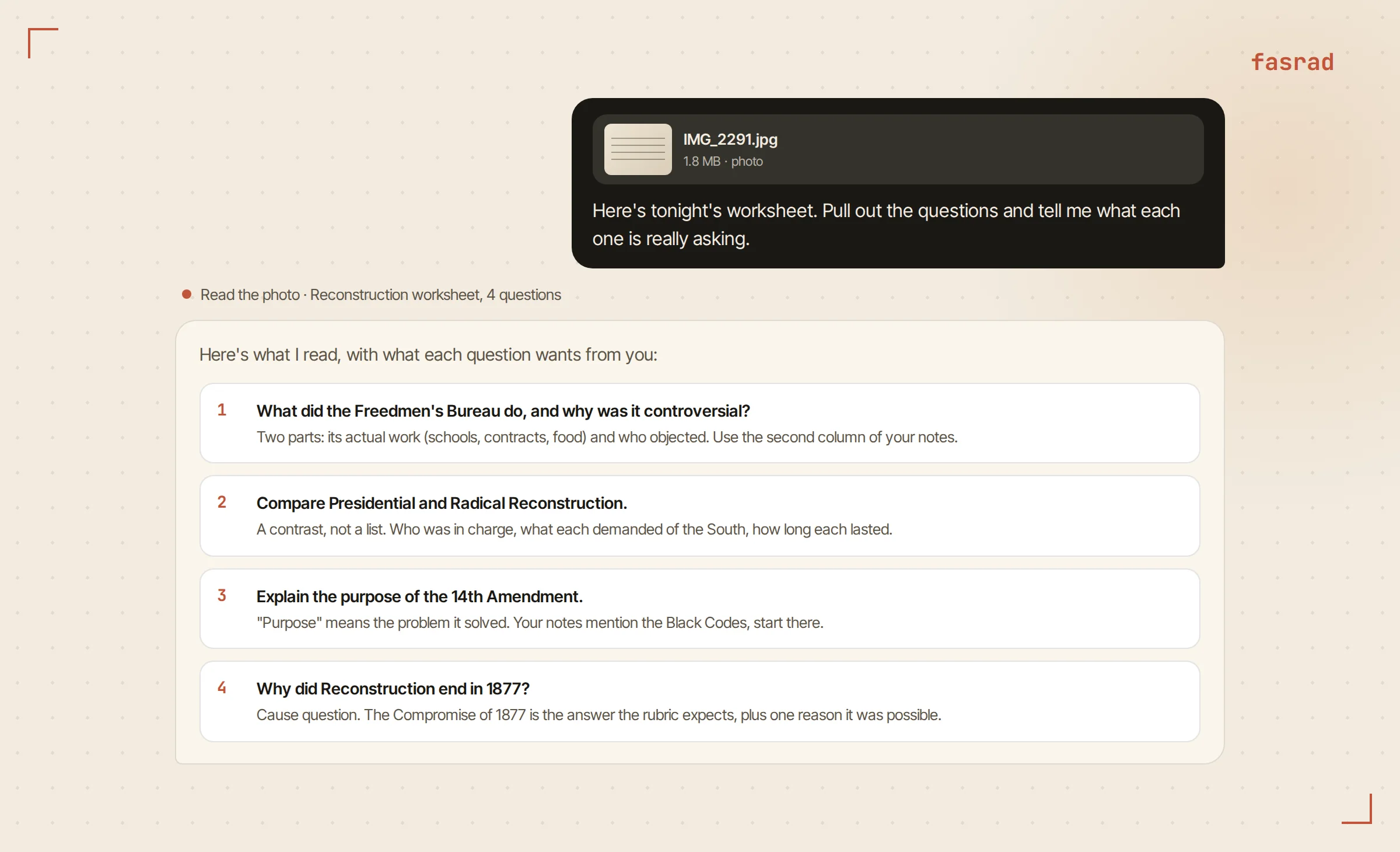
Her usual prompt is "Here's tonight's worksheet. Pull out the questions and tell me what each one is really asking." The agent returns the four questions numbered, each with a one-line reading of what the teacher wants, and waits. Photograph the page flat in decent light. If one line came out wrong, tell it which one and paste the correction, and it carries on with the fixed text.
How do I make it answer in Spanish every time?
Say it once. "For anything about Spanish class, answer in Spanish first and put the English underneath." The agent stores that as a standing instruction, and every later conversation follows it, on the web and on Telegram. Change it the same way, in one sentence, whenever the teacher changes the rules.
The same memory holds smaller preferences. Maya asked for a retelling of a short story "in Spanish, at a level a second-year student could follow" and the agent now defaults to that register for her Spanish 3 reading. An AI language tutor built on the same agent keeps the vocabulary from those retellings for the flashcards in the next section.
Can it turn my notes into flashcards?
Yes, and it starts from her words, not a textbook glossary. After a worksheet is read, "Make a deck from these notes, term on the front, meaning on the back" has the agent pull candidate terms from the text and show the draft list first. She removes the two she already knows cold, confirms, and the deck exists. A photo of a handwritten list, a pasted paragraph, or a CSV export works the same way, always with a preview before anything is saved.
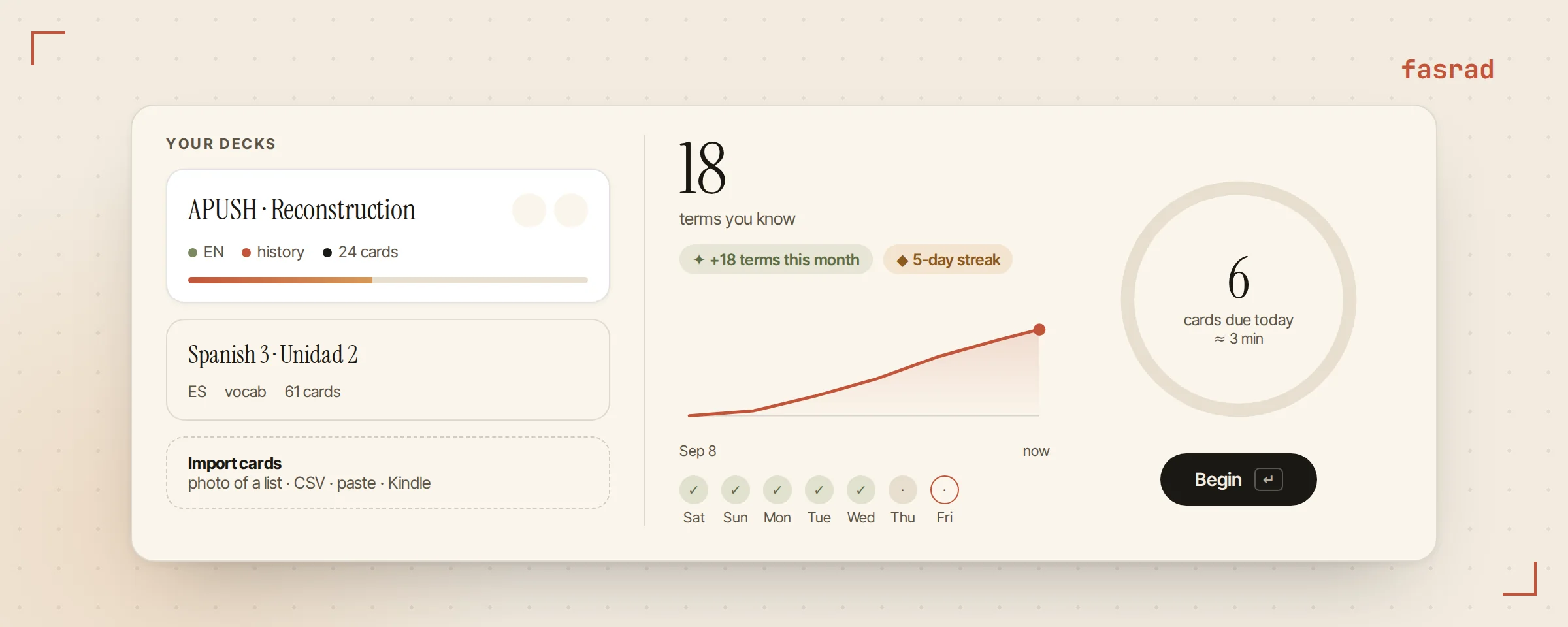
The deck for the Reconstruction unit came out at 24 cards, each with the term, the meaning in her phrasing, and the sentence from her notes it came from. Reviews are scheduled with spaced repetition: a card she gets right comes back at a widening interval, a card she misses returns sooner, and cards she keeps getting right graduate from recognition to fill-in-the-blank to producing the term herself. Every correct answer earns points, nine for a recognition card and up to eighteen for production, and the streak counter keeps the days honest.
Will it remind me to review?
Two ways. The agent already watches the deck on its own: if she usually studies around 4:30 and has not started, if five or more cards are due and untouched for eighteen hours, or if a streak is about to break after 8 PM, it sends one short nudge. On top of that she can be explicit: "Every weekday at 4:30, quiz me on whatever is due."
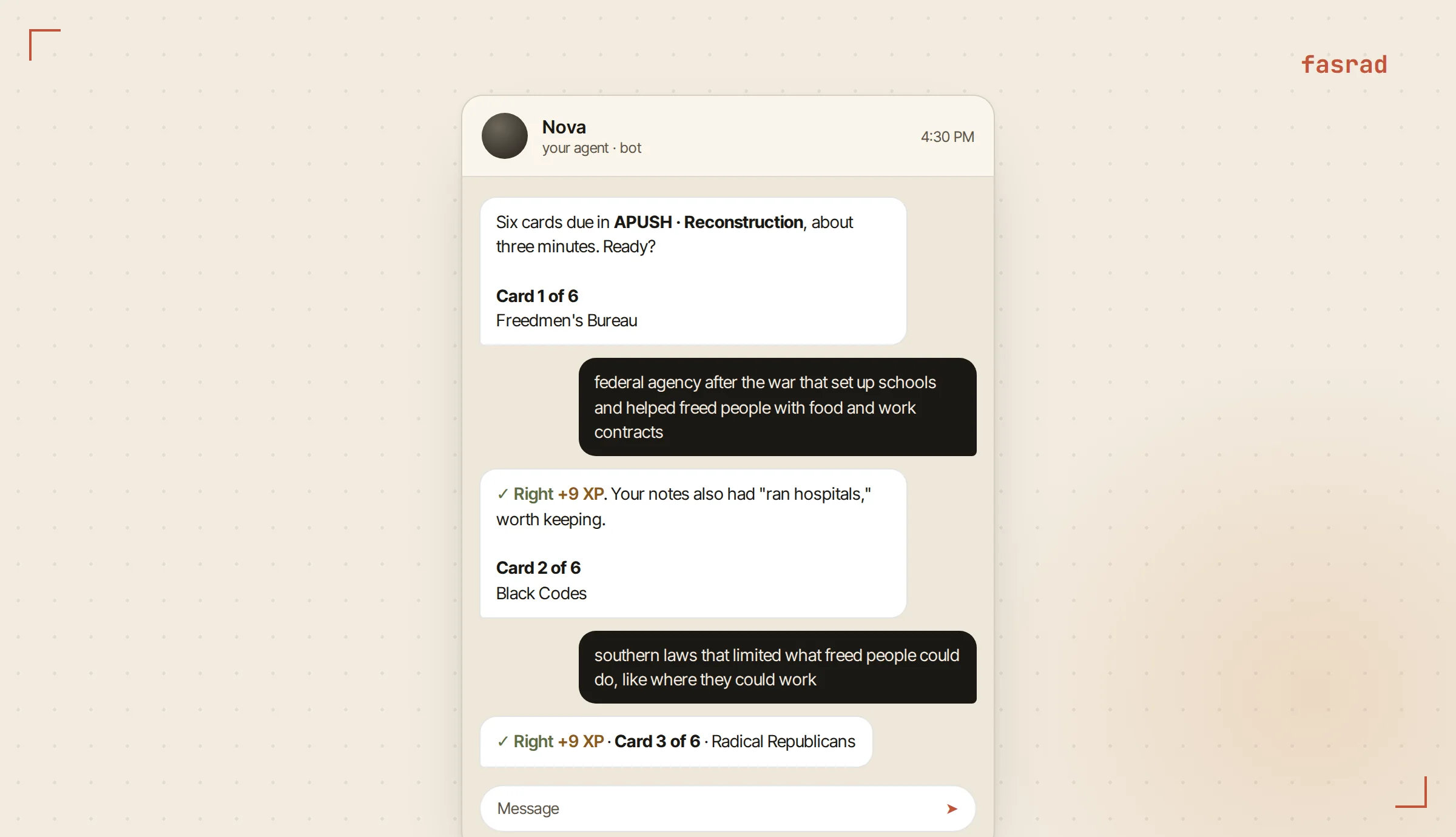
The quiz itself runs in the chat, one card at a time, so it works on Telegram exactly as on the web. She types the answer, the agent grades it, allowing for a typo, and moves to the next card. Six cards take about three minutes. Typing "stop" ends the session. On Sunday a short digest lists what she reviewed and which cards keep slipping, and "Make me a PDF of my most-missed terms" gives her a one-page sheet for the bus. This is the everyday shape of a Telegram AI assistant: the same agent, on the phone, with her decks.
Can it explain this like a person, not a textbook?
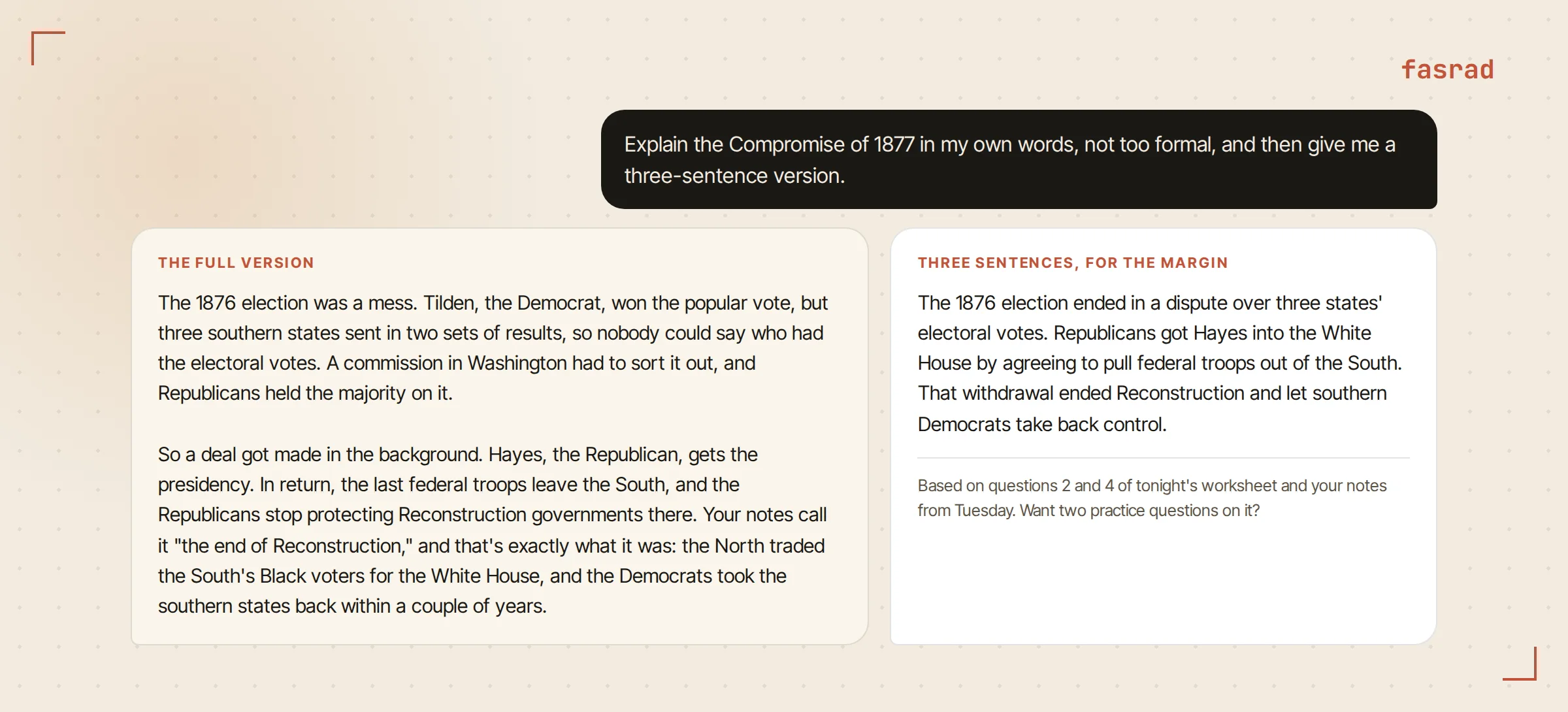
Ask for the register you want and it stays there. Maya's version is "Explain the Compromise of 1877 in my own words, not too formal, and then give me a three-sentence version." She gets the long explanation for understanding and the short one for the margin of her notes, and because she asked for both twice, the agent now offers both without being asked.
Follow-ups stay in the same thread. "Why did the North go along with it?" gets an answer that refers back to the worksheet she uploaded an hour earlier, not a fresh lecture. When she wants to check herself, "Ask me two questions about this and grade my answers" turns the explanation into a short oral exam. An AI tutor that remembers the unit is the difference between help and a search result.
What about the reminders that are not about school?
Same agent, same chat. "Remind me every two hours today until 8 to clean my riding gear" creates a recurring reminder with an end time, delivered on Telegram, and it stops on its own. "Remind me Thursday at 7 to bring the permission slip" is a one-off. Reminders, quizzes, and explanations all live in one place, so she is not switching apps between the parts of the evening.
Where the material comes from
The explanations are written from her notes and her questions, and the flashcards are her terms in her phrasing. Ask "What did you base that on?" and the agent points to the lines of the worksheet it used. The study material is private to her account, the Study skill is off until she turns it on, and nothing about her decks is visible to anyone else.
Frequently asked questions
Does it work with typed notes and PDFs too?
Yes. Photos of handwritten pages, typed notes, pasted text, and uploaded PDFs are all read the same way. For flashcards, a photo of a list, a pasted paragraph, or a CSV file each go through the same preview step before cards are saved.
Which subjects does the flashcard system suit?
Anything with terms and meanings: history, biology, vocabulary in any language, formulas with their names. Cards hold a front, a back, a context sentence from your notes, and an optional memory hook, and the scheduling works the same across subjects.
Can the agent quiz me on my phone?
Yes. The quiz runs inside the conversation, one card at a time, so it works on Telegram exactly as on the web. You type the answer, the agent grades it and moves on. Typing stop ends the session.
How does it decide when a card comes back?
With spaced repetition. A card you get right returns at a longer interval, a card you miss returns sooner, and cards you keep getting right move from recognition to fill-in-the-blank to producing the term yourself.
Can it help with essays?
Yes. It outlines from your notes, works through a draft with you paragraph by paragraph, tells you what is unclear and why, and checks a finished draft against the assignment prompt before you submit it.
Can a parent or teacher see the decks?
No. The study data is private to the student's account, the Study skill is off until the student enables it, and the agent never shares decks or conversations with anyone.