Two minutes and fourteen seconds. That's how long Jamal Pierce spent on the phone booking a fade at Ray's shop on a Wednesday evening, and Ray had clippers in his hand for all of it.
How to automate your barbershop phone with AI
One booking call taken apart second by second, from the caller-ID match before hello to the CRM note that's rewritten after the hang-up.
Fasrad · October 12, 2026 · 4 min read
An AI agent called Sol answers the phone at Southside Cuts now. Regulars get greeted by name and booked straight into the shop calendar, and every call lands in the CRM before the next one rings. Below is Jamal's call taken apart second by second, followed by the three settings Ray switched on to get there.
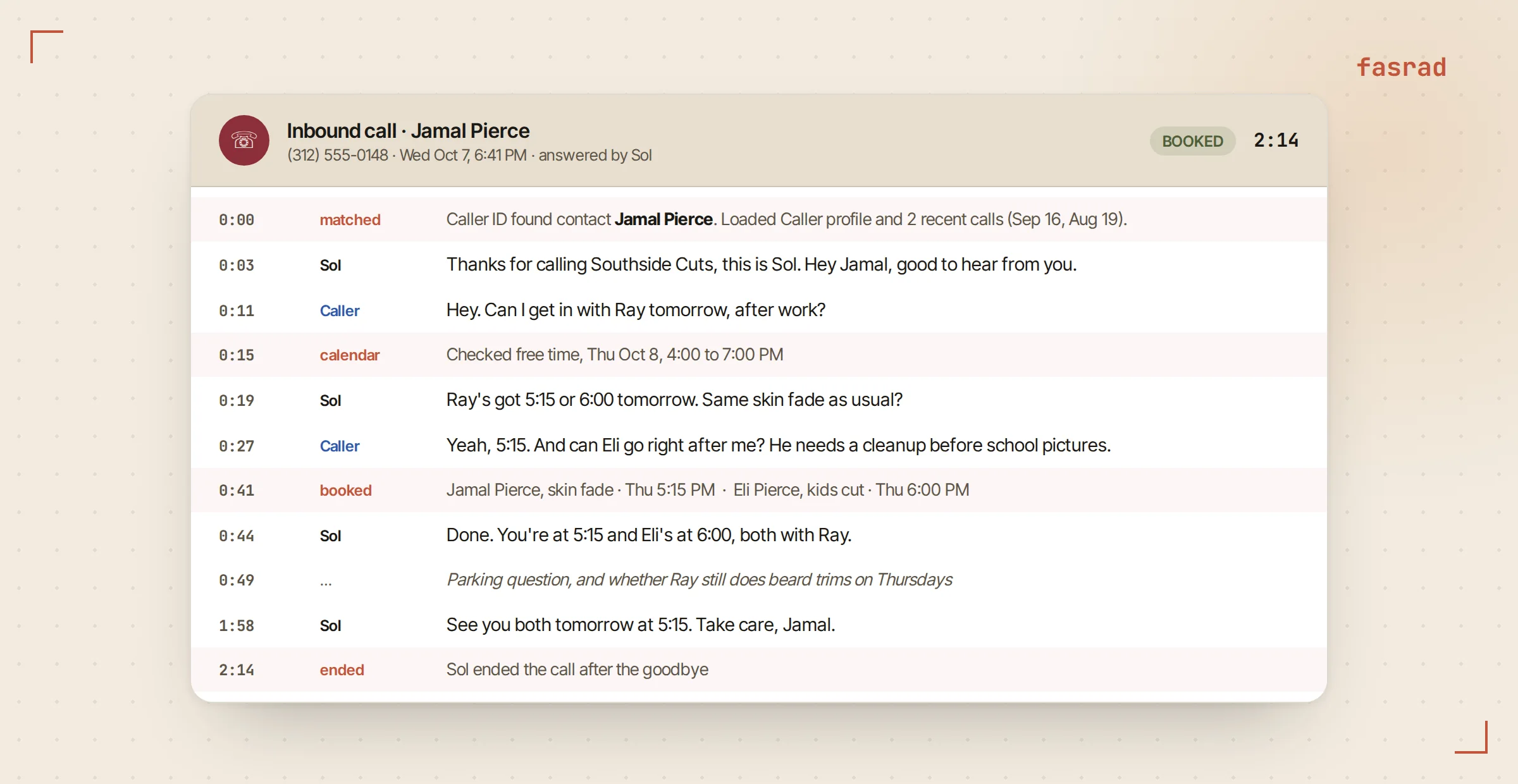
0:00, before anyone says hello
The call comes in on the shop number. Before Sol says a word, the caller's number is matched against the shop's CRM contacts, and it's a hit.
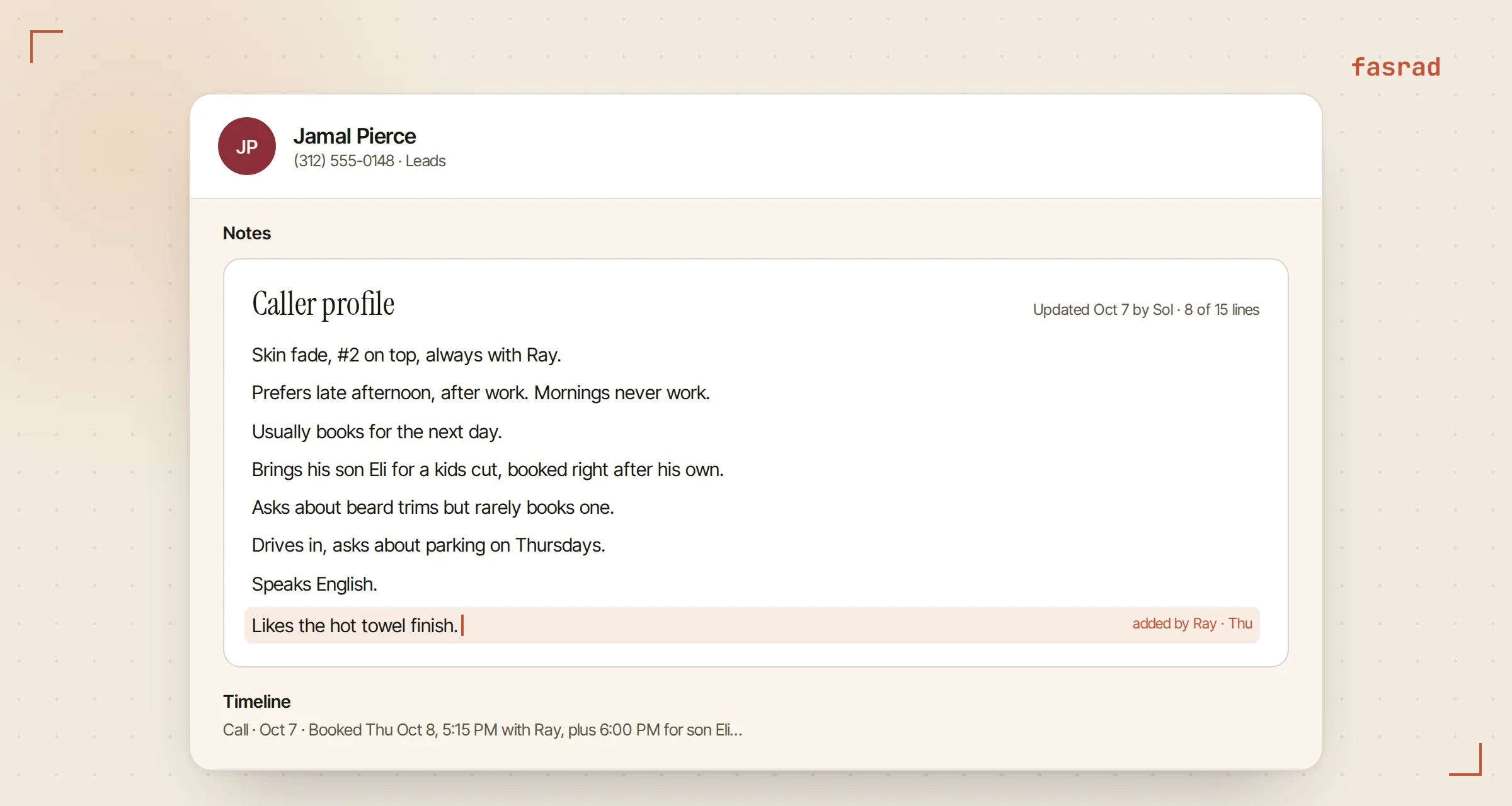
So Sol starts the call already holding two things. One is Jamal's Caller profile, a short note with lines like "skin fade, #2 on top" and "prefers late afternoon, after work". The other is the summary of each of his last two calls, with their real dates. None of it gets read aloud. It's there so Sol never has to ask a regular something the shop already knows.
0:03, a greeting with his name in it
Ray's greeting plays exactly as he wrote it: "Thanks for calling Southside Cuts, this is Sol." Then comes "Hey Jamal, good to hear from you."
Sol never asks for a phone number. Caller ID already has it. A first-time caller gets asked for a name and nothing else, and that name plus the number becomes a contact in the CRM's Leads group. That's how every regular got into the system in the first place, one call at a time, without Ray typing anybody in.
0:11, "tomorrow after work, with Ray"
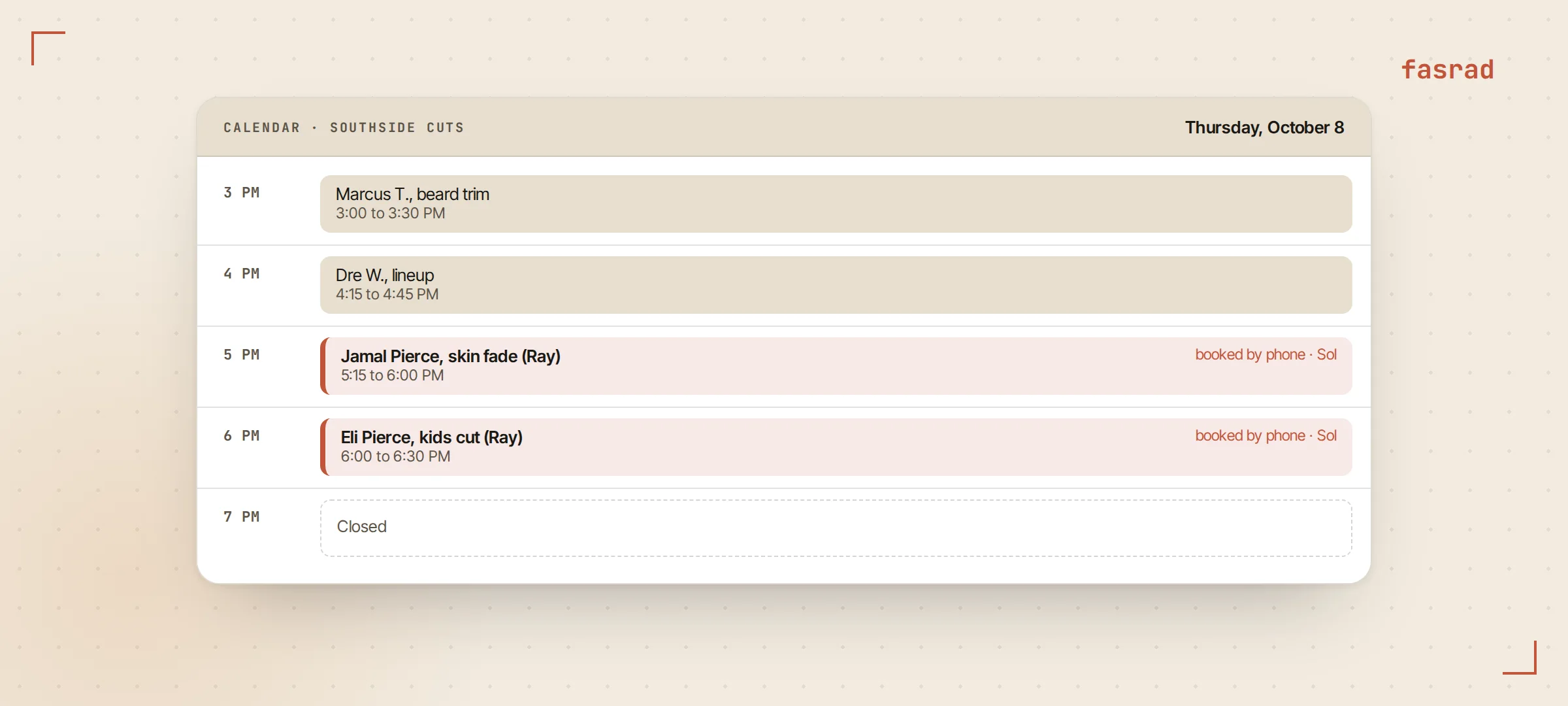
Jamal asks for tomorrow after work. Sol checks the shop calendar for open time and offers 5:15 or 6:00, skipping the morning slots because his profile says mornings never work for him. Jamal takes 5:15. Then he asks whether his son Eli can go right after, and Sol books 6:00 for Eli in the same breath. Both appointments go straight onto the calendar while Jamal is still on the line, so there's no "we'll call you back to confirm".
That last part is the reason to set this up at all. A missed call at a barbershop is usually a booking that went to the shop down the street. The barber booking bot does the same booking from the shop's website, and booking on your own site covers that side in detail.
1:58, goodbye and the hang-up
Sol reads back both times, says goodbye and ends the call itself. It waits three seconds after the goodbye so the last word isn't clipped. Nobody sits in dead air wondering whether the line is still open. Other trades run the same call flow, and the AI phone receptionist page shows it for plumbers and dentists.
Total: 2:14.
After the hang-up: one CRM entry, one rewritten note
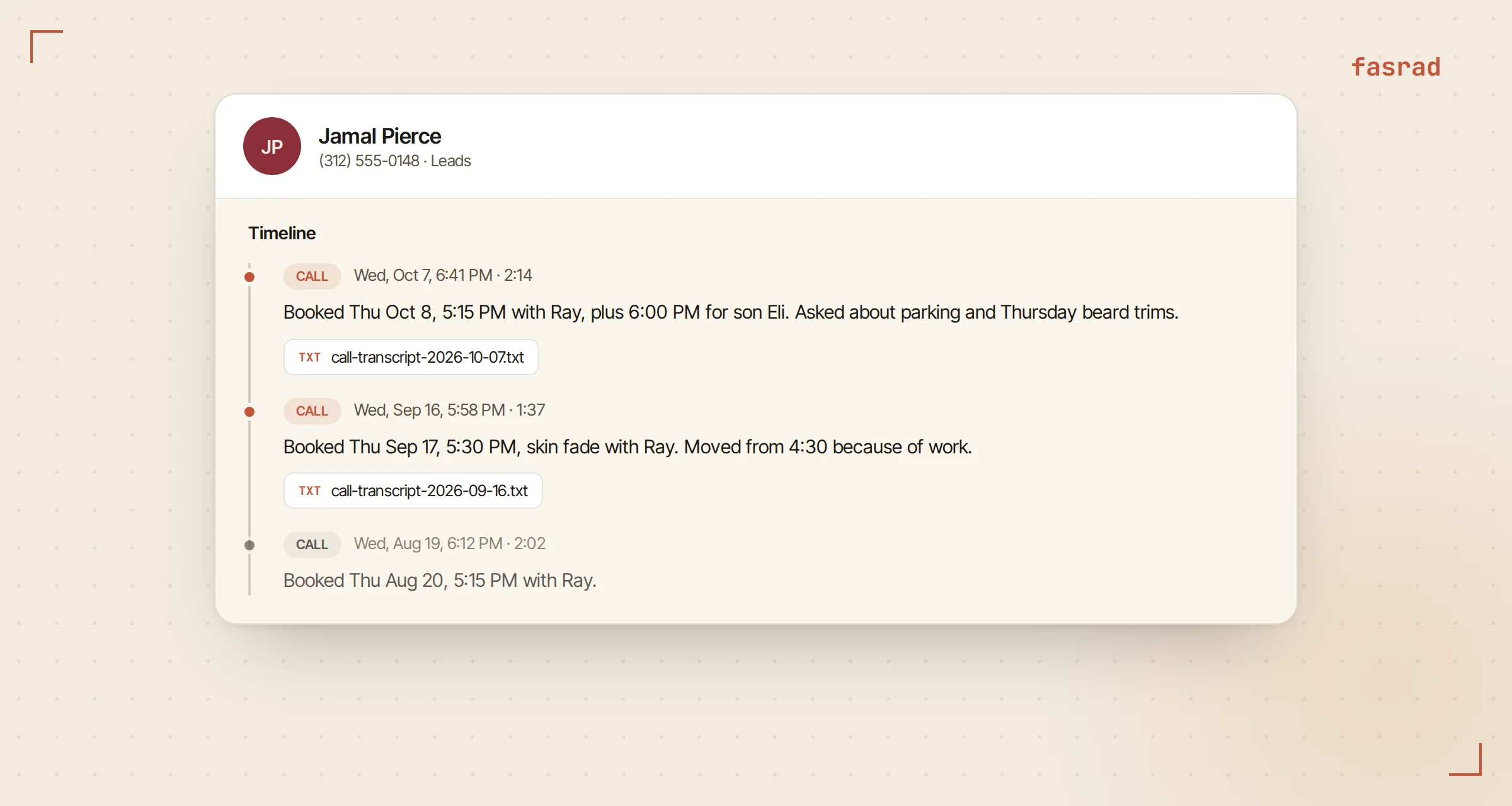
The call isn't finished when the line goes quiet. Sol writes a summary of 200 characters or less with absolute dates, "Booked Thu Oct 8, 5:15 PM with Ray, plus 6:00 PM for son Eli", and marks the outcome as booked. That summary goes onto Jamal's CRM timeline as a dated call interaction, with the full transcript attached as a text file.
Then the profile gets rewritten. Sol merges what it knew with what's new from this call, so "brings his son Eli" joins the list, and it drops anything the call showed was out of date. Appointment times stay out of the profile on purpose. Those belong to the calendar and the timeline, where they carry a date. Health, money and legal details are kept out by default.
The profile is capped at 15 lines. That cap is the best decision in the design, because a profile that grows forever turns into a transcript nobody reads.
Ray edits what Sol knows
The Caller profile is an ordinary note on Jamal's contact in the CRM. Ray opened it on Thursday morning and added a line: "likes the hot towel finish". On Jamal's next call, Sol knew. Deleting a line works the same way, and Sol forgets it.
There's no hidden memory behind the note. What Ray sees is what the phone agent knows, and Sol reads that note fresh at the start of every call. That makes the CRM worth opening between haircuts. The AI personal CRM works the same way for people who aren't running a shop.
How to set up the barbershop phone
Ray did this on a Monday when the shop was closed, in the agent's public settings. It took three switches.
- Phone. Under "Get a phone number", search by US area code and pick one. Ray searched 312 and then had his carrier forward the old shop line to the new number, so customers kept dialing what they always had.
- Calendar Access. Set it to "See and create events". Free/busy alone lets Sol say what's open but not book it.
- Lead Capture. Switch on "Save visitor contact details". New callers become contacts, and returning callers have someone to be matched against.
Before handing out the number, "Test in browser" lets you call the agent from your laptop's mic. The test call comes from a made-up number that stays the same, so a second test call gets recognized like a regular. Ray booked himself three fake fades that way and deleted them afterward. Spoken language can be pinned to English or set to auto-detect, so a caller who opens in Spanish gets Spanish back. If someone hangs up without saying a word, Ray gets a missed-call alert with the number.
Frequently asked questions
Can I keep my existing barbershop phone number?
Yes. Get a number in the agent's Phone settings, then have your carrier forward your existing shop line to it. Customers keep dialing the number they already know.
How does the AI know who's calling?
It matches the caller's number against the contacts in your CRM before it says hello. A match loads that person's Caller profile note and the summaries of their last two calls.
Does it book appointments during the call?
Yes, when Calendar Access is set to See and create events. It checks your calendar for open time and books the slot while the caller is still on the line.
Can I change what the agent remembers about a customer?
Yes. The Caller profile is an ordinary note on the contact in your CRM. Edit or delete a line and the next call uses the new version.
What happens with first-time callers?
The agent asks for their name, never their number, since caller ID already has it. The name and number become a new contact in your CRM's Leads group.
Can I hear it before customers do?
Yes. Test in browser lets you call the agent from your laptop microphone. The test uses a fixed made-up number, so a second test call is recognized like a returning customer.
Does it speak Spanish?
Yes. Set the spoken language to Spanish or to auto-detect, and a caller who starts in Spanish gets answered in Spanish.