Curtis used to type while people talked. He lost about half of what was said, and the half he lost was never the boring half. On a 50-minute call that is 25 minutes of client detail gone.
How to get more than meeting notes from an AI agent
The transcript is the easy part. What matters is the brief before the call, decisions split from action items, the client record updated, and an answer when you ask about it in March.
Fasrad · September 21, 2026 · 4 min read
He runs a two-person operations consultancy out of Kansas City. Six client calls on a busy Tuesday, none of them recorded by anyone else. Now he listens. A Fasrad agent joins the Google Meet as a silent guest, records the call from the live captions, and hands back a summary with decisions and action items pulled apart. The transcript is the smallest part of what it does.
Getting it into the call
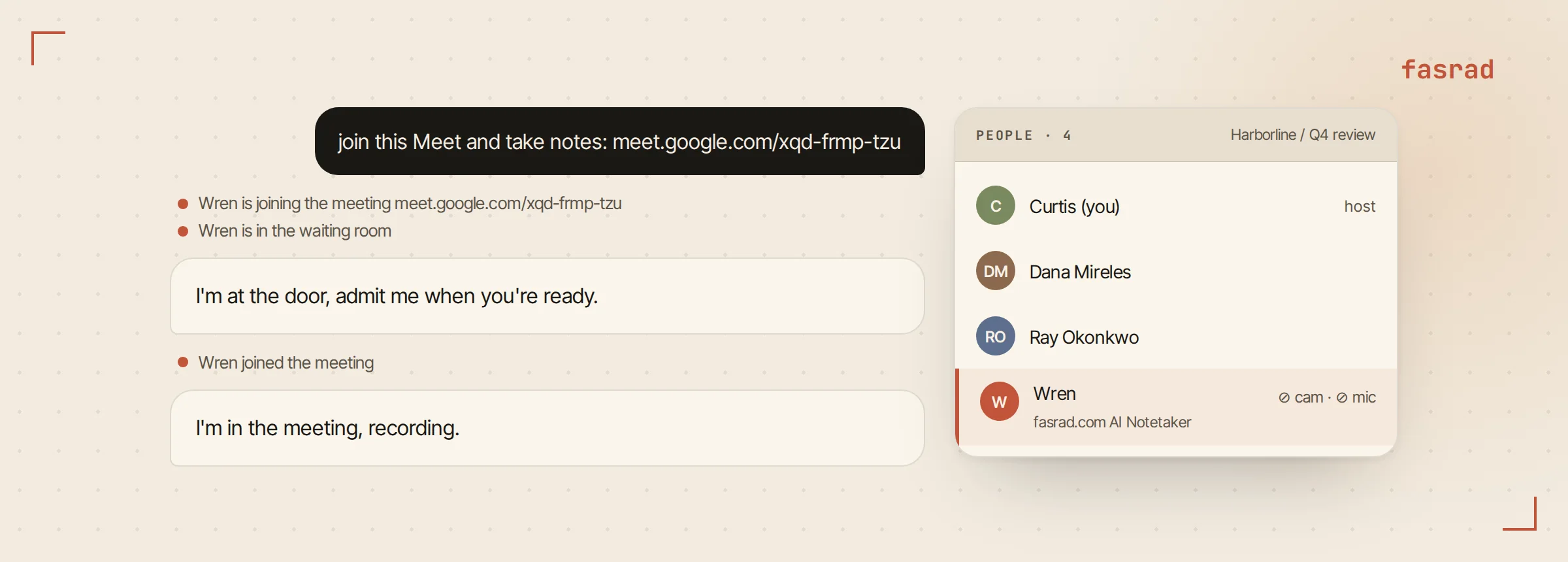
He pastes the link: "join this Meet and take notes". The agent opens the meeting as a guest with camera and microphone off. It needs no Google account of its own and appears in the participant list under his agent's name with a notetaker label, so nobody on the call is guessing what it is.
Most meetings put a guest in the waiting room first. The agent says so and waits, and Curtis admits it the way he admits anyone else.
That label matters more than it sounds like it should. Clients see a named notetaker rather than an unexplained extra participant sitting in their call. It's the version of this that survives a compliance question, and it costs nothing to have. Curtis still says it out loud at the top of a first call with someone new. Nobody has asked him to take it out since.
The brief that lands first
45 minutes before a meeting with someone the agent knows something about, a short brief arrives. What the last conversation with that client ended on. What got promised. What's still open in the CRM, and anything relevant sitting in mail.
It's built at the moment it fires, from the calendar entry as it stands then, so a meeting moved on Monday doesn't produce Friday's brief.
Briefs turn up when there's something behind them. A standup or an internal sync with nothing pending stays quiet, and that is what makes the ones that do arrive worth opening. A junior consultant agent runs on this pattern all week.
What gets captured while you talk
The recording comes from the meeting's own live captions, read as they appear, with the speaker labels kept. Nothing gets streamed back at you mid-call. The agent stays quiet.
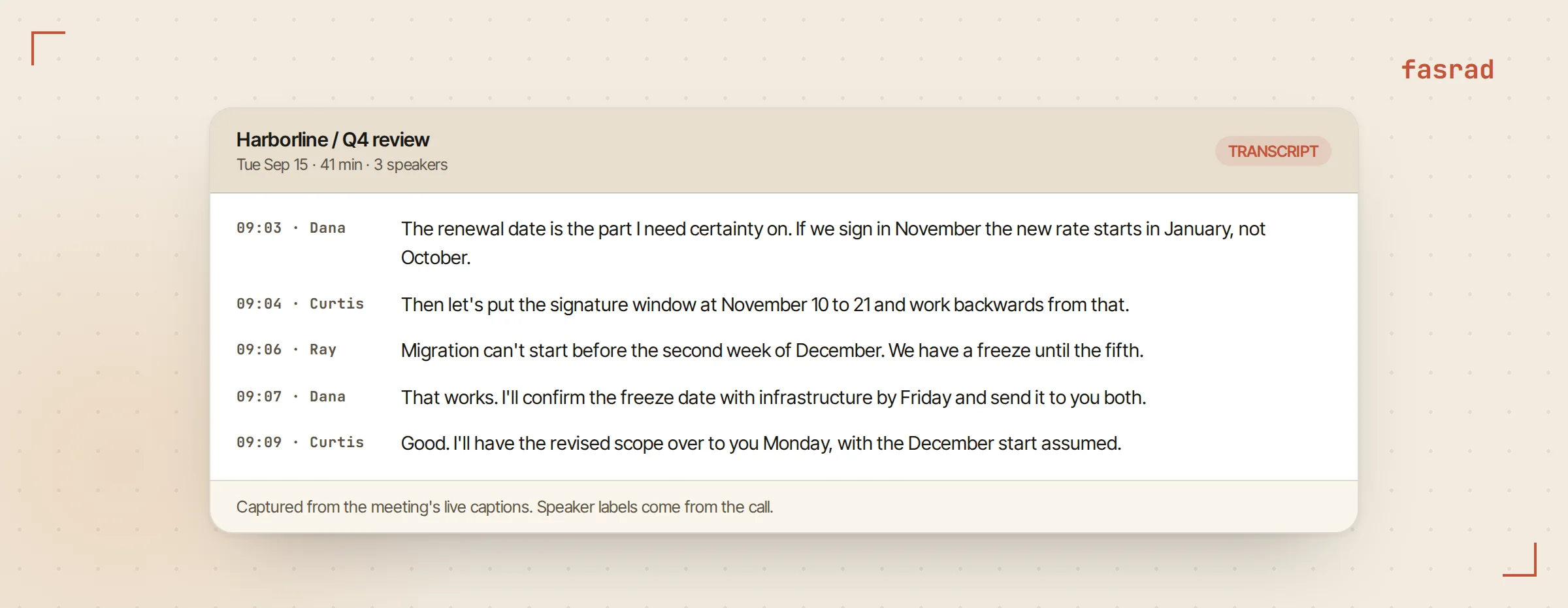
Two things follow from using captions rather than audio. Transcript quality tracks caption quality, so the cleaner the captions on the call, the cleaner the record you get back.
When the meeting ends the agent notices by itself, saves the transcript, and messages Curtis that it's done and ready to summarize. He doesn't have to remember to stop it.
The summary, past the bullet list
"Key points, decisions and action items" returns those as three separate sections, with owners and deadlines taken out of the discussion rather than invented. Decisions read as decisions. Action items carry a name, and a date when somebody actually said one.
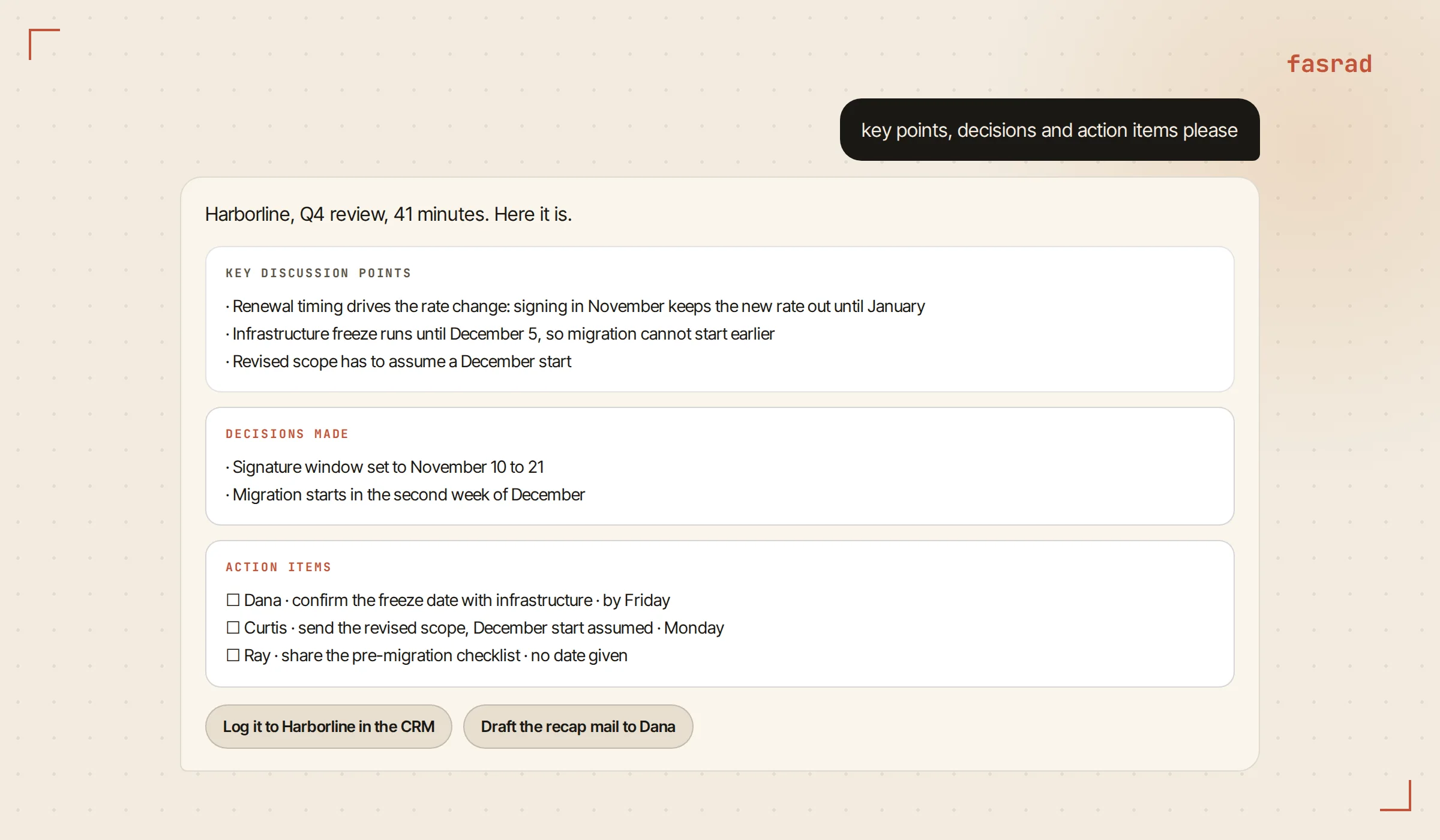
Curtis asks for a focus when the call had one. "focus on the migration timeline" narrows the summary to that thread without dropping the decisions. A 50-minute call collapses to 3 sections and about 400 words. The summary is saved alongside the transcript, so asking for it again later costs nothing.
The client record keeping itself
The part he cares about most happens after the call. The meeting gets logged against the client as a dated interaction with the summary as its body, and the contact's last-contact date moves on its own.
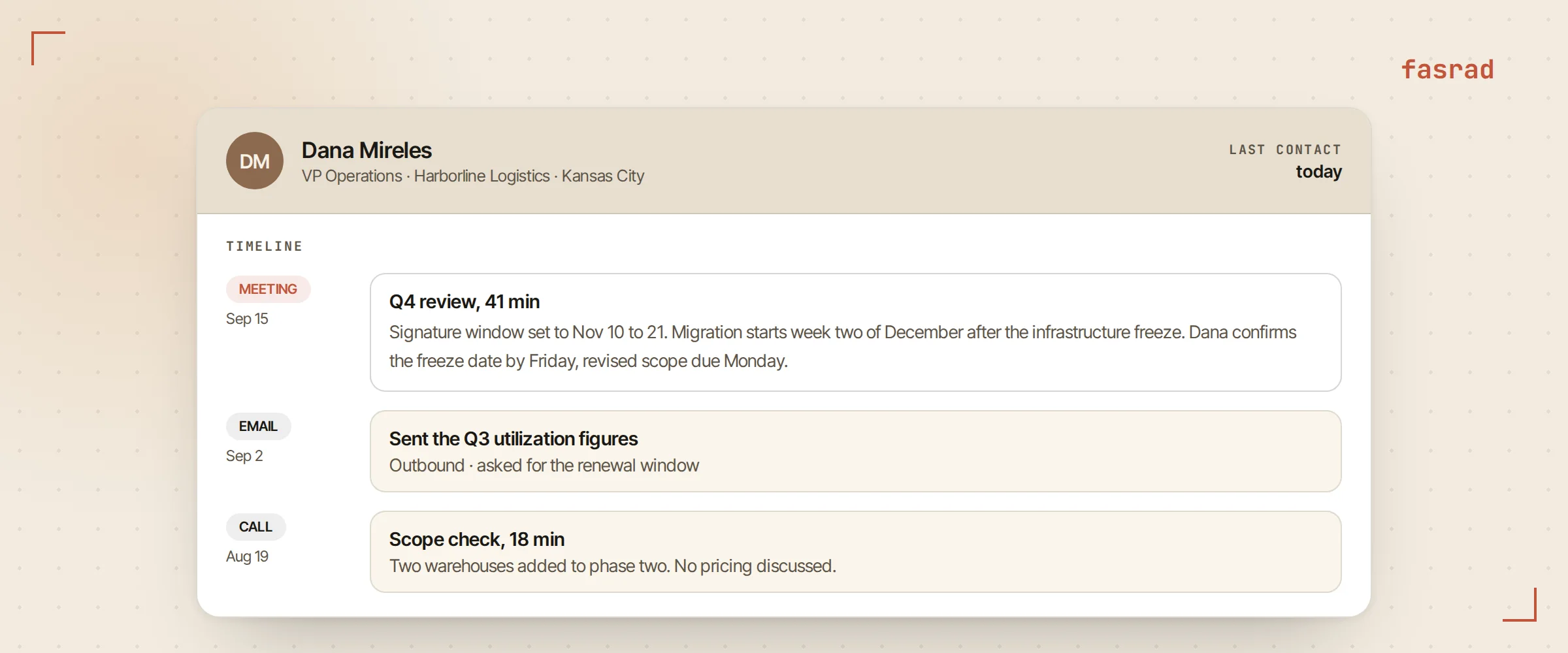
Open that contact 3 weeks later and the history is one column, oldest to newest or the other way round. Calls sit next to mails, meetings and notes. This is the difference between a personal CRM that stays true and one that quietly stopped being true during a busy month.
The same summary can go into a note in the client's notebook when the detail deserves somewhere longer-lived than a timeline row. Curtis keeps one note per engagement and the agent appends to it, so the account history and the call record don't drift apart.
The follow-up nobody writes
"Send Dana the recap and confirm the November date" produces a draft from the actual transcript, addressed from Curtis's own mail address, with the recap and the question in it. It sits in the chat with a Send it button.
Nothing leaves until he taps it. His address, his call.
For the things that resolve later the agent sets its own reminder. An uncertain outcome, a decision somebody promised to confirm, a deadline a client named. It checks back with Curtis after the date rather than before, and the check-in arrives as a reply on the original thread.
Asking about it in March
"What did we decide with Harborline about the renewal?" searches past transcripts by topic, and by participant when a name is the better handle. Back comes the meeting, its date, and the passage where the thing was actually said. Curtis has asked about calls from 7 months earlier and got the paragraph.
Questions spanning several calls work the same way. Ask what a client has said about budget across the year and the agent pulls the relevant passage out of each meeting it sat in, with dates on them, rather than averaging everything into a summary nobody ever said.
That's the answer a meeting follow-up workflow is built on, and the reason Curtis stopped keeping a parallel notes file.
Frequently asked questions
Does the agent need its own Google account?
No. It joins as a guest with camera and microphone off, and appears in the participant list under your agent's name with a notetaker label. Most meetings place a guest in the waiting room first, so someone has to admit it.
How is the meeting recorded?
From the meeting's live captions, with speaker labels kept, so the record shows who said what and when. Transcript quality tracks caption quality, and no audio or video file is stored anywhere.
What is in the summary?
Key discussion points, decisions made, and action items with an owner and a deadline when one was stated, plus a short overview. Ask for a focus, like the pricing thread or the migration timeline, and the summary narrows to it.
Do I have to end the session myself?
No. The agent notices when the meeting ends, saves the transcript, and messages you that it is ready to summarize. You can also tell it to leave early and it hands back the transcript at that point.
Can the meeting land in my CRM automatically?
Yes. The agent logs it against the contact as a dated meeting interaction with the summary as the body, which also moves that contact's last-contact date. Everything shows on the contact's timeline next to earlier calls, mails and notes.
Will it send the follow-up email for me?
It writes the draft from your own address using what was actually said, and attaches a Send it button. Nothing is transmitted until you tap it.
How far back can I ask about a meeting?
As far back as your transcripts go. Search by topic or by participant name and the agent answers from the passage where it was said, naming the meeting and the date.